
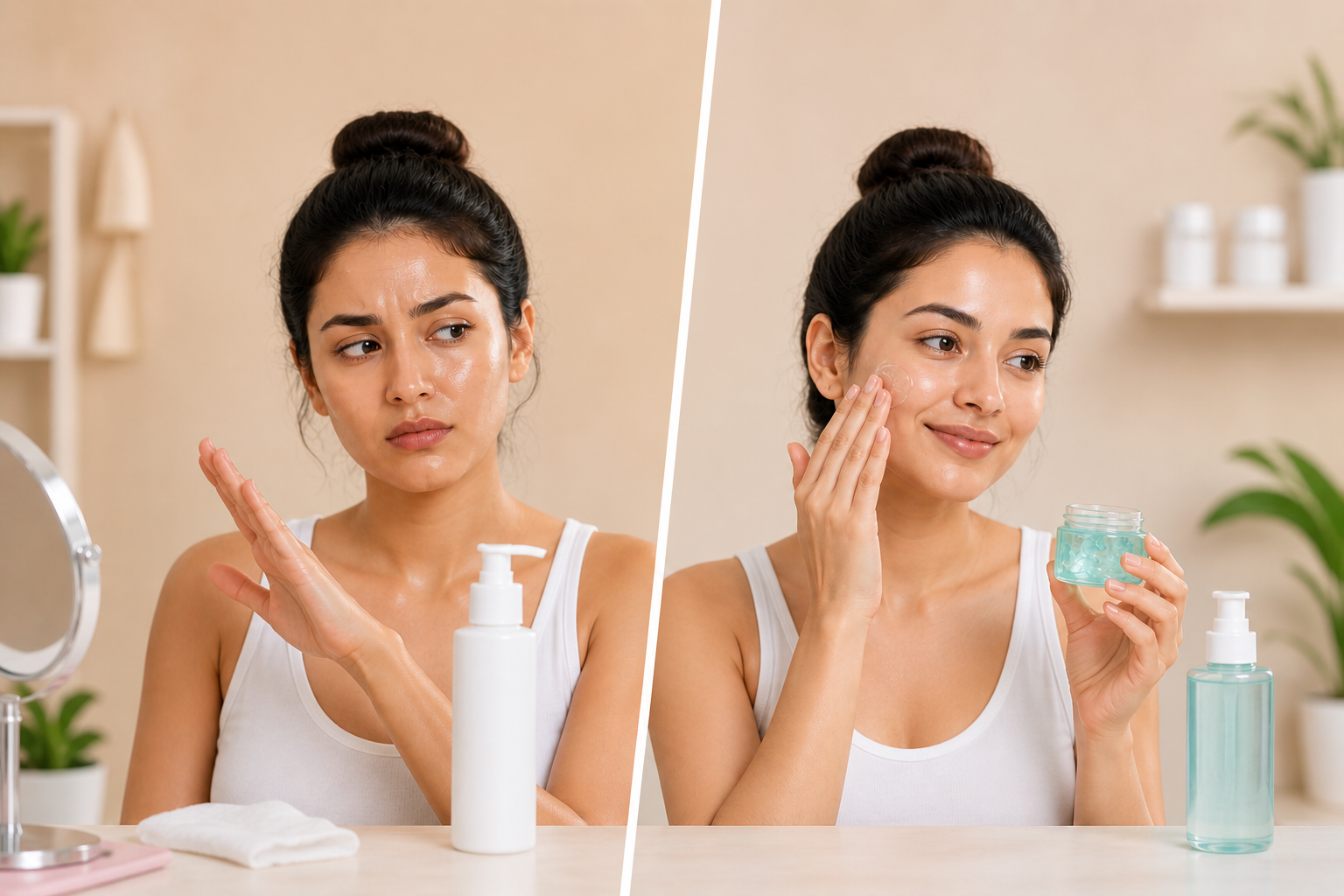
If you have oily skin, you’ve probably heard this advice at least once: “Skip the moisturizer, your skin already has enough oil.” It sounds logical. Why add more moisture when your face already feels greasy by midday?
But skincare isn’t that simple. The idea that oily skin doesn’t need moisturizer is one of the most common myths out there. And believing it can actually make your skin worse, not better.
Let’s break it down.
What does “oily skin” really mean?
Oily skin happens when your sebaceous glands produce excess sebum. Sebum is your skin’s natural oil. It helps protect and hydrate the skin barrier.
But here’s the key point: Oil and hydration are not the same thing.
You can have:
- Oily but dehydrated skin
- Dry but well-hydrated skin
Hydration refers to water content in your skin. Oil is about lipids. Your skin needs both to stay balanced.
So, does oily skin need moisturizer?
Short answer: Yes. It absolutely does.
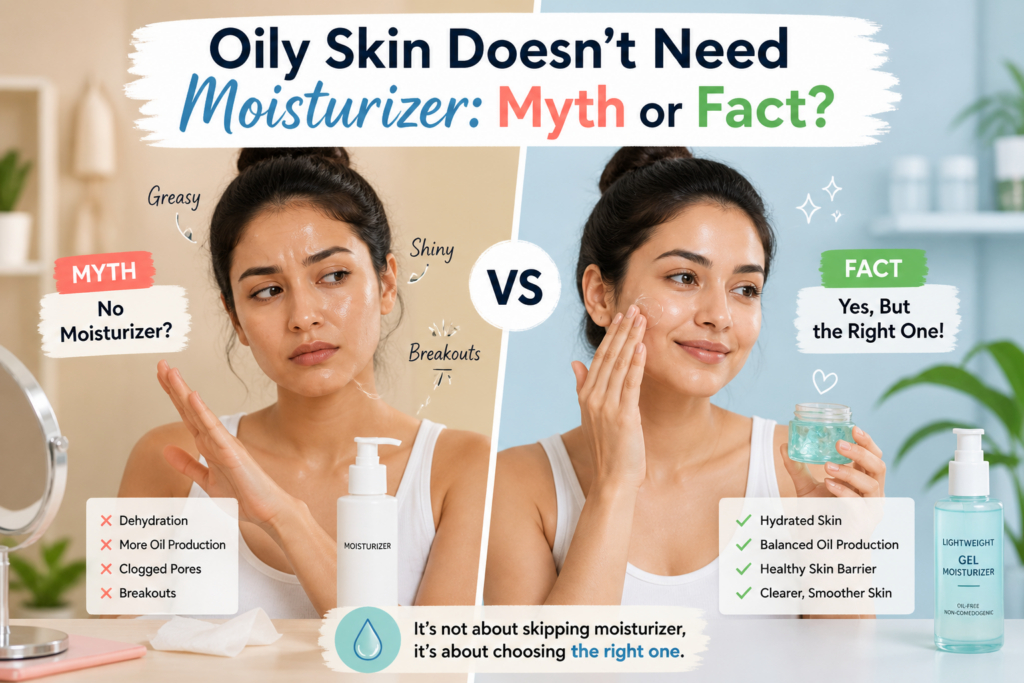
Skipping moisturizer doesn’t reduce oil production. In fact, it often triggers the opposite effect.
When your skin lacks hydration, it tries to compensate. That means producing even more oil to protect itself. The result?
- More shine
- More clogged pores
- More breakouts
It becomes a frustrating cycle: you avoid moisturizer to control oil, but your skin ends up getting oilier.
Why Moisturizer Matters For Oily Skin
Think of moisturizer as support for your skin barrier. When your barrier is healthy, your skin behaves better overall.
Here’s what a good moisturizer does for oily skin:
- Maintains hydration balance
Without enough water, your skin becomes dehydrated. This can lead to dullness, irritation, and increased oil production. - Regulates oil production
When your skin is properly hydrated, it doesn’t feel the need to overproduce sebum. - Protects your skin barrier
A damaged barrier makes your skin more reactive. You may notice redness, sensitivity, or acne flare-ups. - Improves texture and appearance
Well-moisturized skin looks smoother and more even, even if it’s naturally oily.
Why The Myth Still Exists
This misconception usually comes from experience.
Many people with oily skin have used thick, heavy creams that:
- Feel greasy
- Sit on top of the skin
- Clog pores
So they assume all moisturizers are the problem.
But the issue isn’t moisturizer itself. It’s the type.
CHOOSING THE RIGHT MOISTURIZER FOR OILY SKIN
Not all moisturizers are created equal. If you have oily skin, the goal is to hydrate without adding heaviness.
Look for these features:
Lightweight texture Gel or water-based formulas absorb quickly and don’t leave a greasy film.
Non-comedogenic This means the product is less likely to clog pores.
Oil-free or low-oil formulas You don’t need extra oil on already oily skin.
Hydrating ingredients Look for ingredients like:
- Hyaluronic acid
- Glycerin
- Aloe vera
These draw water into the skin without making it oily.
Mattifying ingredients (optional) Some moisturizers include ingredients that help control shine throughout the day.
COMMON MISTAKES TO AVOID
Even if you use moisturizer, certain habits can still make oily skin worse.
Over-cleansing
Washing your face too often strips natural oils. Your skin responds by producing more oil.
Stick to cleansing twice a day.
Using harsh products
Alcohol-heavy toners or strong acne treatments can dry out your skin too much. This again leads to increased oil production.
Skipping moisturizer after acne treatments
Many acne products are drying. Not following up with moisturizer can leave your skin irritated and unbalanced.
Applying too much product
More is not better. A small amount is enough for most moisturizers.
What about humid weather?
If you live in a humid climate, your skin may already feel sticky. It’s tempting to skip moisturizer altogether.
But even then, your skin still needs hydration.
The solution isn’t skipping moisturizer. It’s switching to a lighter one. A gel-based product can give you hydration without the heavy feel.
SIGNS YOUR OILY SKIN IS DEHYDRATED
Sometimes oily skin can trick you. It may look shiny but still lack hydration.
Watch out for:
- Tightness after washing
- Flaky patches
- Dull appearance
- Increased oiliness over time
If you notice these, your skin is likely dehydrated and needs moisture.
A SIMPLE ROUTINE FOR OILY SKIN
You don’t need a complicated routine. Keep it simple and consistent.
Morning:
- Gentle cleanser
- Lightweight moisturizer
- Sunscreen
Night:
- Cleanser
- Treatment (if needed, like acne products)
- Moisturizer
That’s it. The key is balance, not overload.
FINAL VERDICT: MYTH OR FACT?
“Oily skin doesn’t need moisturizer” is a myth.
Skipping moisturizer can lead to:
- More oil production
- Dehydration
- Breakouts
The real solution is not avoiding moisturizer, but choosing the right kind and using it correctly.
The bottom line
Oily skin isn’t a problem to “dry out.” It’s a skin type that needs balance.
When you give your skin proper hydration, it becomes calmer, more predictable, and easier to manage.
So if you’ve been avoiding moisturizer because of oily skin, it might be time to rethink that habit. Your skin isn’t asking for less care. It’s asking for the right care.