
From Monsoon To Winter: How To Change Your Skincare Routine
As the seasons change, your skin changes with them.
The transition from the humid monsoon months to cooler, drier weather can leave your skin feeling noticeably different. Skin that felt comfortable and hydrated during the rains may suddenly feel tight, rough, flaky or itchy. Your usual body-care routine may not feel as effective as it once did.
This is because your skin has to adapt to changing temperature, humidity and daily habits.
The good news? You don’t need an elaborate skincare routine to make the transition easier. A few thoughtful changes to the way you cleanse, moisturise and care for your skin can help maintain moisture and support a healthy skin barrier.
Why Does Your Skin Feel Different When the Season Changes?
During the monsoon, the air generally carries more moisture. Higher humidity can make your skin feel softer and less prone to dryness.
As the weather becomes cooler and drier, humidity levels can drop. This can increase moisture loss from the skin, leaving it feeling dry or tight. Hot showers, indoor air conditioning and frequent cleansing can add to the problem.
Your skin barrier plays an important role here. It helps keep moisture in while protecting your skin from everyday environmental stressors. When the barrier becomes compromised, your skin may feel dry, rough or uncomfortable.
That is why your skincare routine may need a seasonal reset.
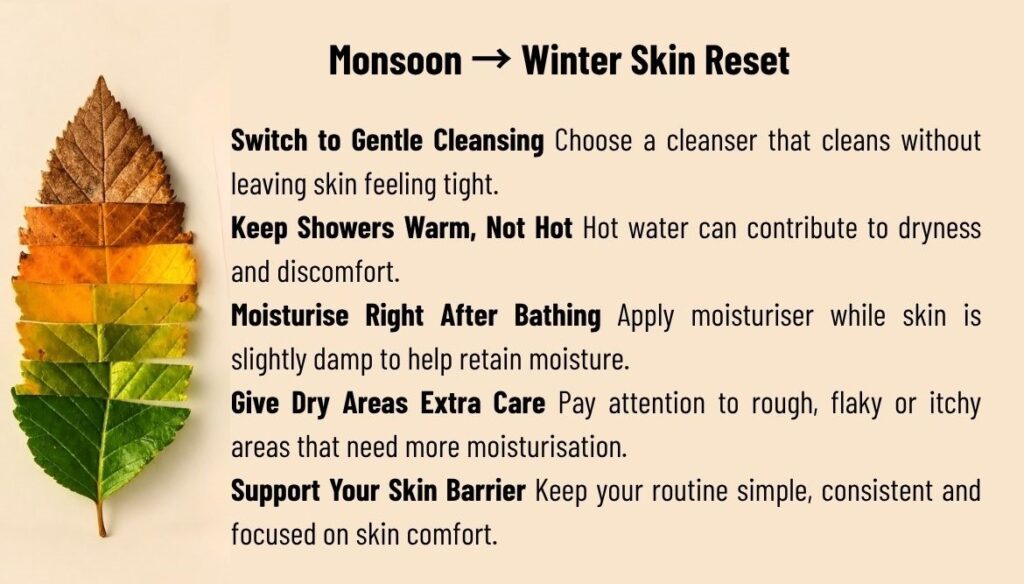
1. Start with a Gentler Cleansing Routine
Cleansing is an essential part of skincare, but more cleansing does not necessarily mean better cleansing. During the warmer months, you may prefer a refreshing shower after spending time outdoors. When the weather cools down, however, long, hot showers and harsh cleansers can leave already-dry skin feeling even more stripped.
Try keeping your showers comfortably warm rather than very hot. Choose a gentle body wash that cleans without leaving your skin feeling excessively tight after rinsing. Pay attention to how your skin feels after your shower. If it feels unusually tight or dry, it may be time to reconsider your cleansing routine.
Clean skin should still feel comfortable.
2. Don’t Skip Body Moisturisation
One of the easiest changes you can make during the seasonal transition is to become more consistent with moisturisation. Instead of waiting until your skin looks visibly dry, make moisturising a regular part of your routine.
The best time to apply a body moisturiser is shortly after bathing, when your skin is clean and slightly damp. Applying moisturiser at this stage can help support the skin’s moisture balance.
If your skin tends to become particularly dry during cooler months, you may also find that you need a richer moisturising routine than you did during monsoon. Look for formulations designed to provide lasting hydration while supporting the skin barrier.
3. Pay Attention to Dry and Itchy Areas
Seasonal dryness doesn’t always affect the entire body equally. You may notice certain areas becoming dry, rough or uncomfortable before the rest of your skin. Common areas include the arms, legs, elbows and other areas that are naturally prone to dryness.
Instead of treating your entire body the same way, pay attention to what your skin is telling you. If certain areas repeatedly feel dry or itchy, give them additional moisturising care. Ingredients such as PEA (Palmitoylethanolamide) are commonly used in skincare formulations designed to support skin comfort and hydration.
PEA, or Palmitoylethanolamide, is particularly interesting in skin-comfort formulations because of its role in supporting the skin’s natural comfort mechanisms.
4. Rethink Your Shower Temperature
A long, hot shower can feel wonderful on a cold morning. Your skin, however, may not be quite as enthusiastic.
Very hot water can remove some of the skin’s natural oils, which may contribute to dryness and tightness. This becomes especially relevant when the weather is already dry.
You don’t have to give up your relaxing shower completely. Simply keep the temperature comfortably warm and avoid spending unnecessarily long periods under hot water.
Your skin will thank you for it.
5. Moisturise More Consistently, Not Just More Heavily
When skin becomes dry, the instinct is often to apply a large amount of moisturiser once in a while. Consistency is usually more useful. Think of moisturisation as daily maintenance rather than an emergency response. Applying a suitable moisturiser regularly can help maintain the skin’s moisture levels and support its barrier.
For very dry areas, you can give those areas extra attention rather than applying increasingly heavy layers everywhere.
A simple routine followed consistently is often easier to maintain than a complicated one.
6. Don’t Forget Your Hands and Feet
Hands and feet can be some of the first places to show seasonal dryness. Frequent handwashing, exposure to water and cooler weather can leave hands feeling dry and rough. Feet may also become noticeably drier as the weather changes.
Make hand and foot moisturisation part of your seasonal routine. Applying moisturiser after washing your hands and before bedtime can be particularly helpful.
For feet, a richer moisturiser followed by comfortable cotton socks at night can help maintain softness.
7. Keep Your Skincare Routine Simple
Seasonal changes can tempt you to buy multiple new products.
But your skin doesn’t necessarily need a completely new routine every few months.
Instead, focus on the basics:
- Cleanse gently.
- Moisturise consistently.
- Avoid excessive heat.
- Support your skin barrier.
- Pay attention to changes in comfort.
Once these foundations are in place, you can decide whether your skin needs anything more.
8. Make Your Body-Care Routine More Skin-Friendly
Your face may already have a carefully planned skincare routine, but your body deserves the same consideration.
A simple body-care routine can look like:
Step 1: Take a short, comfortably warm shower.
Step 2: Use a gentle body cleanser.
Step 3: Pat your skin dry rather than rubbing it aggressively.
Step 4: Apply a moisturiser while the skin is still slightly damp.
Step 5: Give extra attention to areas that tend to become dry or uncomfortable.
This small routine can make a meaningful difference during the transition into cooler weather.
Your Skin Audit for the Season
As you move from monsoon into autumn and winter, take a moment to check in with your skin.
Ask yourself:
- Does my skin feel tight after bathing?
- Are certain areas becoming rough or flaky?
- Am I moisturising consistently?
- Have I started taking longer or hotter showers?
- Does my current body wash leave my skin feeling dry?
- Are my hands and feet becoming noticeably drier?
- Does my skin feel comfortable throughout the day?
Your answers can tell you whether your routine needs a little adjustment.
Seasonal Shift Doesn’t Have to Mean a Complicated Routine
Your skin doesn’t need a dozen new products every time the weather changes. It needs consistency, gentle care and the right kind of moisture.
As the monsoon fades and cooler, drier days arrive, gradually shift your routine towards gentler cleansing, regular moisturisation and better barrier care. And most importantly, listen to your skin. If it feels dry, tight or uncomfortable, that’s often your cue to give it a little more care.
Because good skincare isn’t about following every seasonal trend. It’s about understanding what your skin needs—and giving it that care every day.