

The Link Between Stress, Cortisol & Breakouts
You eat well, follow a consistent skincare routine, and still—breakouts appear right before an important meeting, event, or stressful week. This isn’t a coincidence. The connection between stress, cortisol, and acne is deeply rooted in skin biology, and understanding it can help you manage breakouts more effectively.
Stress doesn’t just affect your mind—it shows up on your skin. Let’s explore how cortisol, the body’s primary stress hormone, influences acne and what you can do to break the cycle.
WHAT IS CORTISOL?
Cortisol is a hormone released by the adrenal glands in response to stress. Often called the “fight or flight” hormone, it plays a vital role in:
- Regulating metabolism
- Controlling inflammation
- Maintaining blood sugar levels
- Supporting immune response
In short bursts, cortisol is helpful. But when stress becomes chronic, cortisol levels remain elevated—and that’s where skin problems begin.
HOW STRESS TRIGGERS BREAKOUTS
When you’re under stress, your body signals a perceived threat. This triggers the release of cortisol, which indirectly affects the skin in several ways:
- Increased Oil Production: Cortisol stimulates sebaceous glands, increasing sebum (oil) production. Excess oil can mix with dead skin cells, clog pores, and create the perfect environment for acne-causing bacteria.
- Heightened Inflammation: Chronic stress keeps the body in an inflammatory state. This inflammation shows up on the skin as:
- Red, angry breakouts
- Slower healing
- Increased sensitivity
Inflammatory acne, in particular, tends to worsen during periods of emotional or physical stress.
- Weakened Skin Barrier
Elevated cortisol disrupts the skin’s natural lipid barrier. A compromised barrier leads to:
- Increased water loss
- Greater sensitivity to products
- Higher risk of irritation and acne
This explains why stressed skin often feels both oily and dehydrated at the same time.
THE CORTISOL–ACNE CYCLE
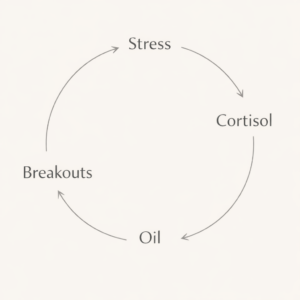
Stress and acne often feed into each other, creating a self-perpetuating loop:
- Stress raises cortisol levels
- Cortisol increases oil and inflammation
- Breakouts appear
- Breakouts cause more stress
- Cortisol rises again
Without intervention, this cycle can continue for weeks or months.
WHY STRESS ACNE LOOKS DIFFERENT
Stress-induced breakouts often have distinct characteristics:
- Appear suddenly
- Cluster around the jawline, cheeks, or forehead
- Are more inflamed and tender
- Heal slower than usual
These breakouts are less about poor hygiene or products and more about internal imbalance.
THE GUT–BRAIN–SKIN CONNECTION
Stress doesn’t act alone. It affects the gut, immune system, and skin microbiome.
When stressed:
- Gut health may decline
- Inflammation increases systemically
- Skin microbiome balance is disrupted
This interconnected pathway explains why stress management is as important as topical skincare when addressing acne.
CAN SKINCARE ALONE FIX STRESS BREAKOUTS?
Skincare is essential—but it’s only part of the solution.
During high-stress periods, aggressive acne treatments can worsen the problem by further damaging the skin barrier. Instead, the focus should shift to:
- Calming inflammation
- Supporting barrier repair
- Using non-irritating, clinical formulations
Barrier-focused skincare—like Siracilt’s dermatology-led approach—helps reduce the skin’s reactivity during stressful phases and prevents secondary breakouts caused by irritation.
HOW TO MANAGE STRESS-RELATED ACNE EFFECTIVELY
- Simplify Your Skincare Routine
Avoid introducing multiple new actives when stressed. Stick to:
- A gentle cleanser
- A barrier-supporting moisturizer
- Targeted acne treatment if needed
Less is often more during stressful periods.
- Prioritize Sleep
Sleep is when cortisol levels naturally drop and skin repair peaks. Aim for:
- 7–9 hours of consistent sleep
- A calming pre-bed routine
- Reduced screen exposure before bedtime
- Better sleep directly supports clearer skin.
- Practice Daily Stress Regulation
You don’t need dramatic lifestyle changes. Simple habits help:
- Deep breathing exercises
- Short walks
- Journaling
- Gentle stretching or yoga
Even 10 minutes a day can lower cortisol levels.
- Nourish Your Body
Stress depletes key nutrients. Support your skin by including:
- Omega-3 fatty acids
- Antioxidant-rich fruits and vegetables
- Adequate hydration
- Reduced refined sugar intake
What you eat influences inflammation levels throughout the body.
- Choose Calming Skincare Ingredients
Look for ingredients that support stressed skin:
- Anti-inflammatory actives
- Barrier-repairing lipids
- Non-comedogenic moisturizers
- Dermatologically tested formulations
Ingredients like PEA (Palmitoylethanolamide) help soothe inflammation and support skin balance without triggering irritation.
THE SIRACILT PERSPECTIVE
At Siracilt, acne is viewed as more than a surface issue. Breakouts require a holistic approach—one that respects the skin barrier, calms inflammation, and supports long-term resilience.
By combining clinical skincare science with gentle, biomimetic formulations, Siracilt helps skin stay healthy even during stressful moments.
Breakouts during stressful times aren’t a failure of your skincare routine—they’re your body responding to internal pressure. Understanding the role of cortisol empowers you to treat acne with patience rather than aggression.
When stress rises, your skin needs calm, consistency, and care. Address the root cause, support your barrier, and let your skin recover naturally—because clear skin isn’t just about what you apply, but how you live.